Looks fun? Sign up below and join hundreds of parents and children who have contributed to science!
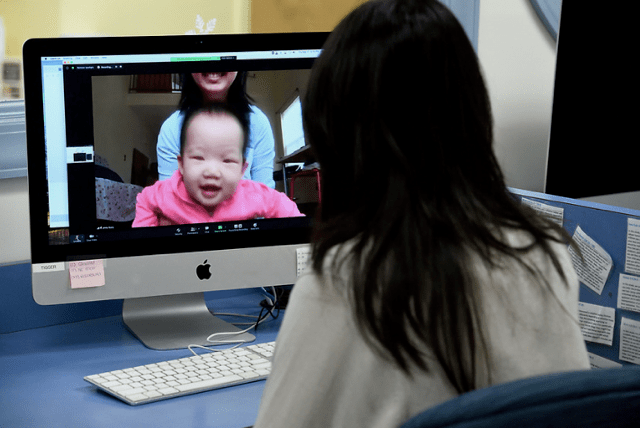
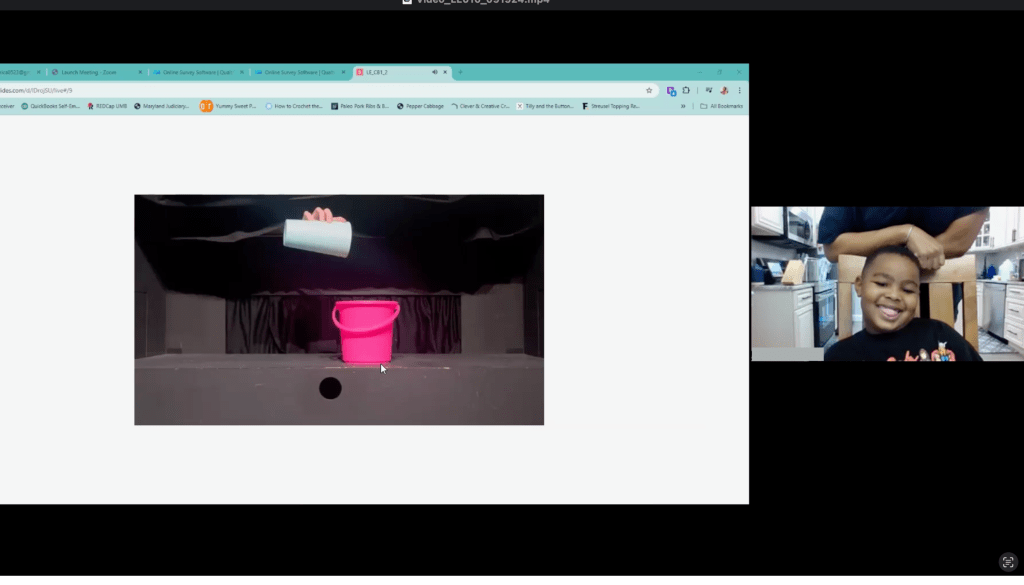
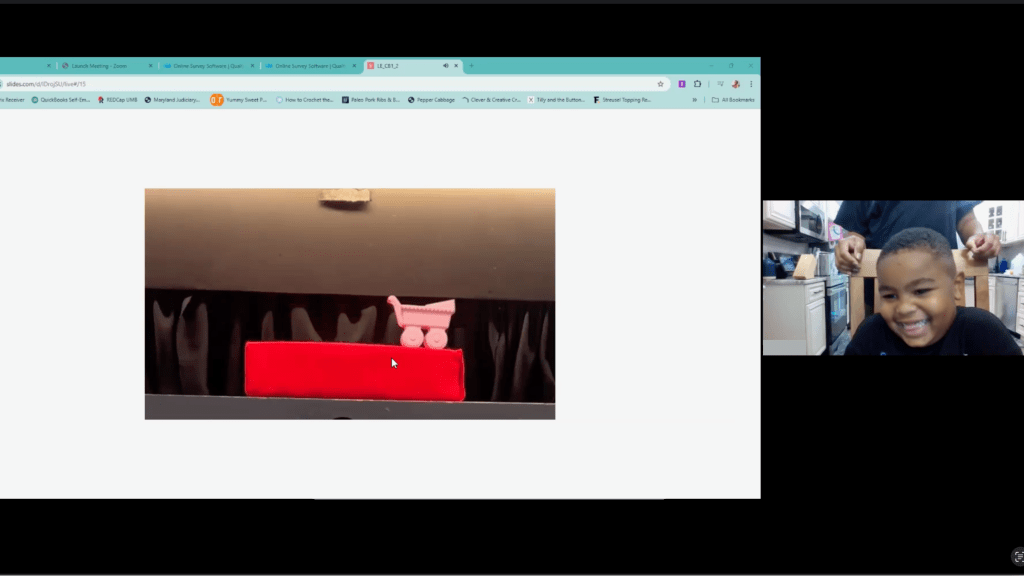
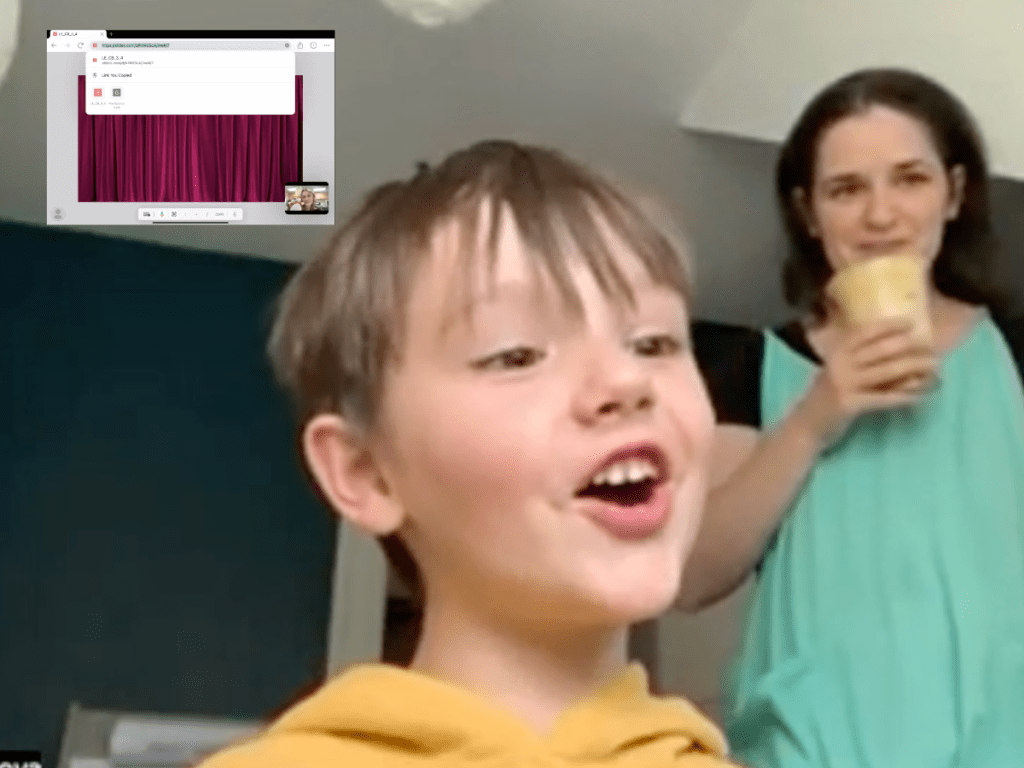
These take place online, over Zoom! The unique Zoom link will be provided upon sign-up. These visits typically take no more than 10-15 minutes, and often involve your child viewing short clips and videos with some follow-up questions, or it might be more interactive by playing a brief memory or logic game with a researcher! We record these meetings and use the videos to measure your baby’s spontaneous reactions, such as how long your baby spends looking or reaching to each display. As a thanks for participating, you will receive an Amazon gift card varying in value from $5-$10 depending on the study. See pictures below to get an idea of what your little scientist will get to experience!

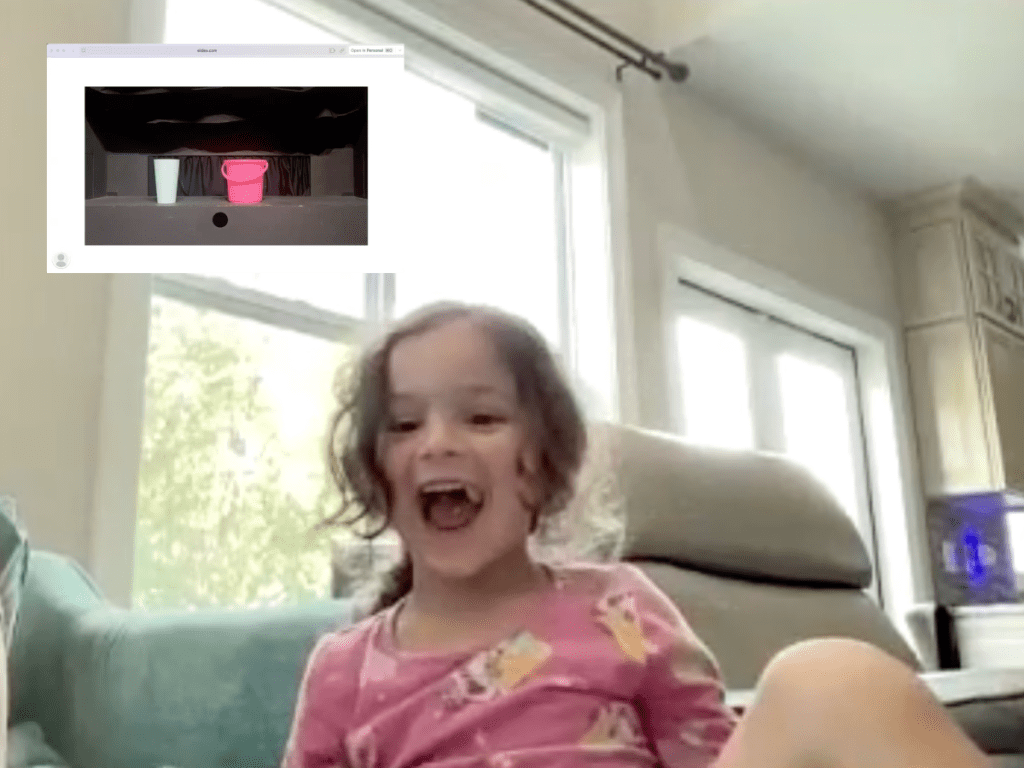
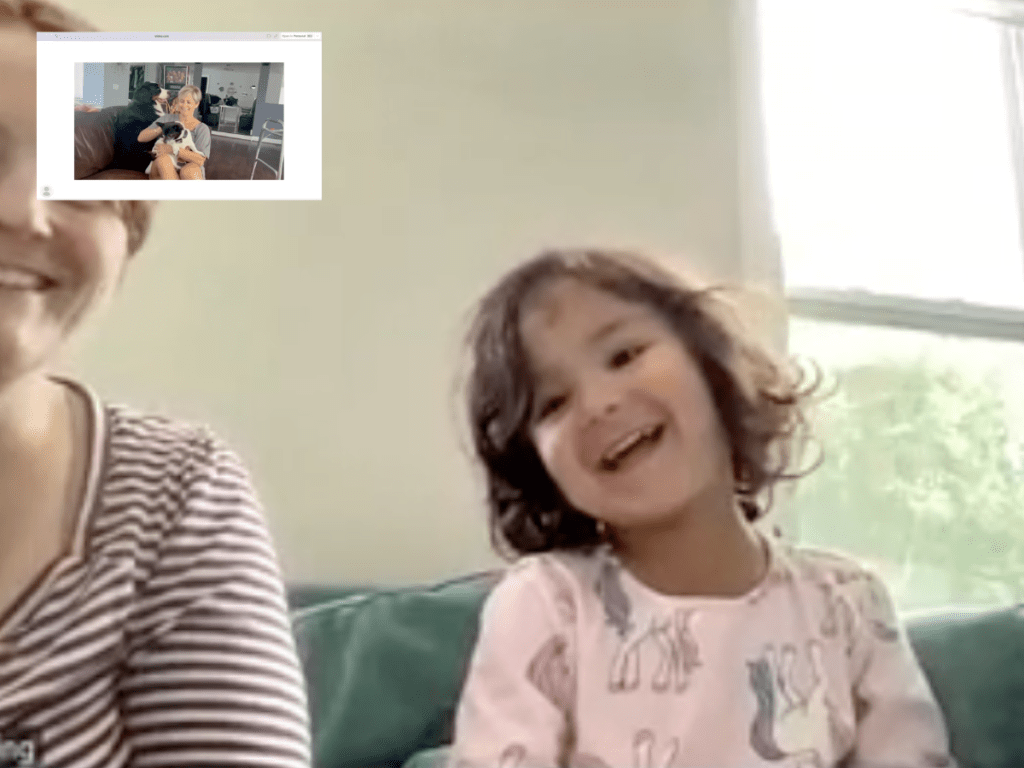

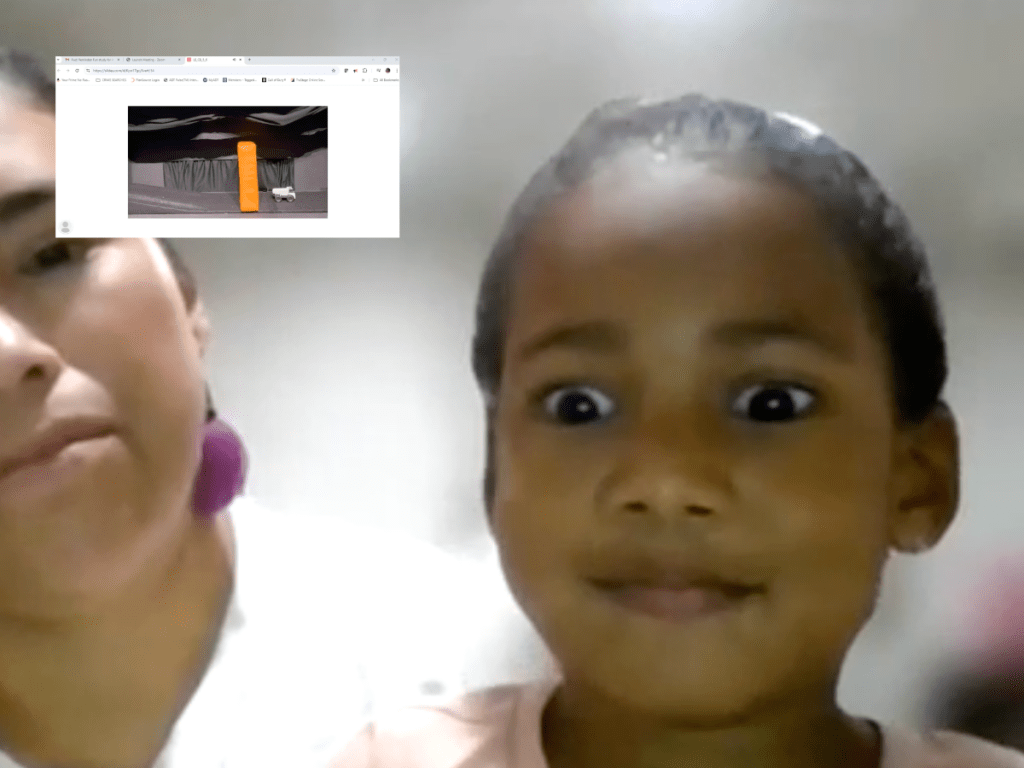
Current online studies!

Do babies have special expectations about human beings?
For ages 8-10 months!
As adults, we can easily recognize that artifacts (such as your coffee mugs) can look identical to each other, whereas it is rare for human beings to look identical to each other. Do young babies also hold such expectations? Our hypothesis is that babies will be surprised by seeing multiple identical people, but not by seeing multiple identical objects. If so, this will tell us that babies hold special expectations about people from early in life!
Sign up here!
How babies think about surprising objects
For ages 12-16 months!
Previous studies have shown that babies understand physical principles an object should follow. For example, they look longer at a ball if it appears to pass through a solid wall, showing that babies recognize that objects should be solid and not go through each other. This study explores how infants think about objects that behave in these kinds of surprising ways. After seeing an object behave unexpectedly, do they still expect this object to obey physical rules? To find out, we will compare babies’ interest in a toy that does two surprising things in comparison to just one!
Sign up here!

How do babies generate explanations for surprising events?
For ages 15-19 months!
This study aims to explore how babies understand the surprising events that they see. In a 10-minute study over Zoom, our child will see a series of short videos where toy balls roll through and bounce off of walls on the screen. Can they identify which wall corresponds with the balls’ movements, and then make predictions about the walls? The video is about 10 minutes, and babies usually love to watch it!
Sign up here!
How do infants expect surprise to influence others’ choices?
For ages 42-48 months!
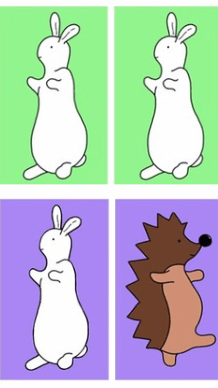
We want to know when children put such concepts to use to make informed choices. In this 10 minute study over Zoom, we will play a fun game with your child where we will show them some cards with different characters on them, and they will have to find a bunny. When they will have to choose a card, a certain card will certainly have a bunny on the other side, whether other cards will only possibly have a bunny.
Sign up here!

What types of explanations do children endorse for different kinds of events?
For ages 48-84 months!
This study aims to explore what types of explanations children endorse for different kinds of events. In this 10-minute study over Zoom, your child will see a series of short videos where different kinds of events happen (ex. a ball bouncing off of a wall or a plant growing), and they will be asked to choose between two options for why this event happened. We are curious which type of explanation they will prefer.
Sign up here!


 Laboratory for Child Development